
How to Build a Cyber Incident Response Plan That Actually Works
- December 23, 2025
- Posted by: Gradeon
- Category: Cyber Security
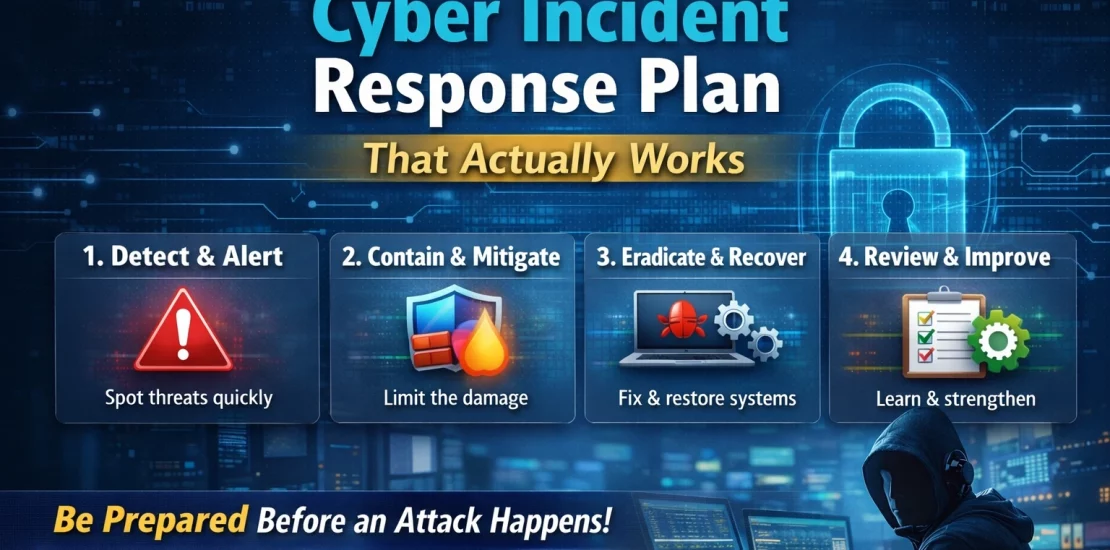
Most businesses understand cybersecurity is essential, yet many still lack a practical and effective cyber incident response plan. In the UK, where cyber attacks are increasing across SMEs, public-sector bodies and large enterprises, organisations must know exactly how to detect, manage and recover from a cyber incident. A well-structured incident response plan is no longer optional, it is essential for resilience, business continuity and regulatory compliance.
A successful plan is not simply a document created for audit purposes. It must be a clear, actionable framework that your teams can follow with confidence during high-pressure situations. Whether your business is just starting out or already has a mature security programme, understanding how to build an incident response plan that actually works is critical.
This guide provides a detailed breakdown of the key components every organisation should include, and why working with a cyber security consultancy provider can significantly improve your readiness.
Why Incident Response Matters More Than Ever
Cyber attacks are no longer rare events. UK businesses face a constant stream of phishing attempts, ransomware campaigns, supply-chain breaches, insider threats and accidental data leaks. Even organisations with strong defences are not immune. The question is no longer whether a cyber incident will happen but whether you are prepared when it does.
An effective incident response plan allows organisations to:
- Minimise financial loss
- Reduce operational downtime
- Protect customer data
- Meet regulatory requirements
- Maintain trust with clients and stakeholders
- Recover quickly and safely after an attack
Regulators such as the ICO (GDPR) and frameworks like NIS2 place strong emphasis on incident reporting and response readiness. Without a proper plan, businesses risk compliance failures on top of the attack itself.
The Core Components of a High-Quality Incident Response Plan
A strong response framework must include clear instructions, designated roles and structured workflows. Below is a breakdown of the components that matter most.
1. Clear Roles and Responsibilities
In the event of a breach, confusion causes delays. Every minute matters during an incident. Your plan must clearly outline who does what.
Key roles typically include:
- Incident Response Lead – coordinates the entire response
- Technical Lead – manages containment, investigation and recovery
- Communications Lead – handles internal and external communication
- HR Lead – manages employee-related issues or insider threats
- Compliance Lead – ensures adherence to GDPR, NIS2 and other regulations
- External Partners – such as a cyber security consultancy, IT support provider or forensic investigator
Teams should know how to escalate incidents, how to contact support out of hours and what authority each role has during a crisis.
2. Incident Classification and Severity Levels
Not every alert is a disaster. Your plan should define:
- What qualifies as a security incident
- How incidents are categorised (low, medium, high, critical)
- The required response steps for each level
For example, a phishing email accidentally opened may be a low-level incident, while ransomware is classified as critical. Severity determines escalation path and urgency.
3. Detection and Reporting Procedures
Incidents must be detected quickly and reported immediately. Employees should know how to:
- Recognise suspicious activity
- Report incidents to the correct team
- Avoid attempting to fix issues themselves
Technical tools such as endpoint detection, firewalls, and SIEM platforms are essential, but employee awareness is equally important. This is why many businesses invest in cyber awareness training provided by consulting firms.
4. Containment and Isolation Steps
Once an incident is confirmed, the first priority is to stop the attack spreading. Your plan must include:
- How to isolate compromised devices
- When to disconnect systems
- Temporary access restrictions
- Blocking malicious IPs, accounts or traffic routes
These steps must be clear, structured and well-practised.
5. Investigation and Forensic Analysis
Understanding what happened is vital for compliance and recovery. Investigators must determine:
- The entry point of the attack
- Whether personal data was exposed
- What systems were affected
- Whether the attacker still has access
- Whether a PCI forensic investigation or regulatory notification is required
Many organisations rely on external partners such as cyber security consulting services to perform forensic-level investigations.
6. Eradication and Recovery
This phase focuses on removing the threat and restoring normal operations. It may include:
- Removing malware or malicious code
- Resetting passwords and access controls
- Applying patches
- Restoring backups
- Testing systems before going live
Recovery must be done carefully to avoid reinfection or data corruption.
7. Communication Management
Communication mistakes during incidents can worsen the situation. Your plan must outline:
- Who needs to be informed internally
- When customers or suppliers must be notified
- How to communicate with regulators (ICO for GDPR, NIS2 authorities, etc.)
- What public statements should look like
Clear, timely communication prevents panic and protects reputation.
8. Post-Incident Review
After resolving the incident, a full review should be carried out to:
- Analyse the root cause
- Identify lessons learned
- Improve systems and processes
- Update the incident response plan
This process is essential for building ongoing cyber resilience.
Why Many Incident Response Plans Fail
Despite good intentions, many businesses create response plans that do not work when needed. Common issues include:
- Plans are too technical or too vague
- Staff never receive training
- No regular testing or tabletop exercises
- Outdated contact lists or escalation procedures
- Plans that exist only for audits, not real-world use
A successful plan must be practical, repeatable and regularly rehearsed.
The Role of Cyber Security Consultancy in Incident Readiness
A skilled cyber security consultancy UK brings external expertise and proven frameworks that strengthen your plan. They can help with:
- Developing a tailored incident response plan
- Running tabletop simulations
- Providing 24/7 breach response support
- Conducting forensic investigations
- Aligning incident response with GDPR, NIS2 and ISO 27001
- Strengthening cyber resilience long term
This external support ensures your business is not relying solely on internal resources during a high-stress event.
Conclusion: Preparation Is the Best Defence
A cyber incident can happen at any time, but a well-built response plan ensures your business reacts quickly, effectively and confidently. By allocating roles, defining procedures and practising regularly, organisations significantly reduce damage, downtime and regulatory risk.
With rising threats in the UK and stricter compliance obligations, partnering with professional cyber security consulting services helps ensure your incident response plan is robust, actionable and always ready.