
On Premises, Cloud or Hybrid Infrastructure Choices Are No Longer Technical Decisions for 2026
- January 20, 2026
- Posted by: Gradeon
- Category: IT Infrastructure
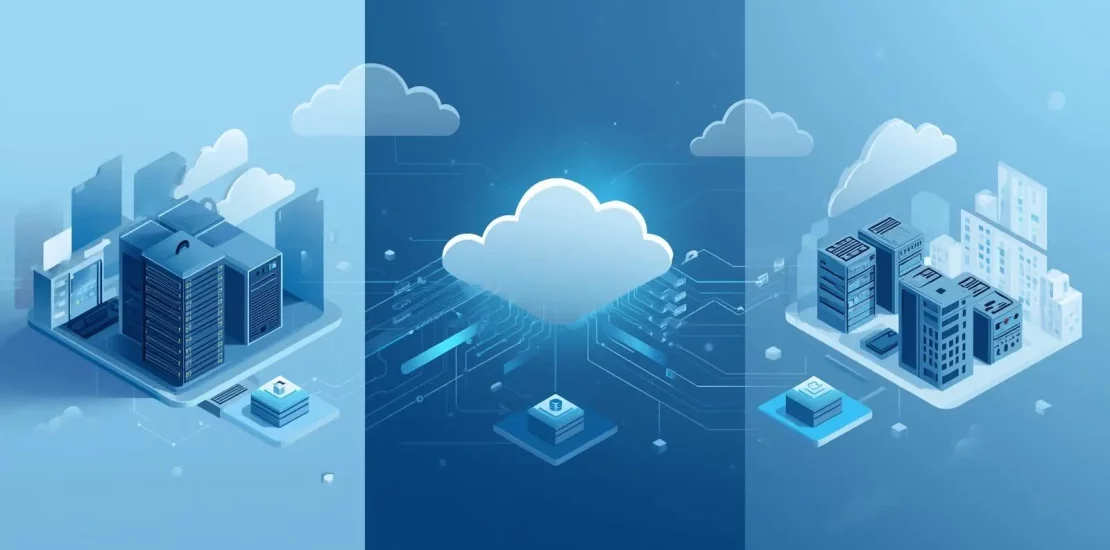
For many UK businesses, infrastructure decisions are still treated as technical choices handled by IT teams. In reality, whether systems run on premises, in the cloud, or in a hybrid environment affects how teams work, how data is protected, and how easily the business can adapt.
As 2026 approaches, infrastructure decisions are becoming harder to reverse. Choosing the wrong model creates friction, security exposure, and operational constraints that affect the entire organisation.
Understanding the strengths and limitations of each infrastructure model is essential for making a decision that supports long term business needs.
On Premises Infrastructure Still Has a Place for Some Businesses
On premises infrastructure gives businesses direct control over servers, data, and systems. For organisations with strict regulatory requirements or legacy applications, this level of control remains important.
Benefits of on premises infrastructure include:
- Full visibility into physical systems
- Direct control over access and configuration
- Predictable performance for local workloads
However, on premises infrastructure also introduces challenges. Maintenance responsibility sits entirely with the business. Scaling capacity requires capital investment. Remote access and resilience require careful planning.
For many businesses, on premises infrastructure works best when workloads are stable and highly controlled.
Cloud Infrastructure Offers Flexibility but Requires Discipline
Cloud infrastructure has transformed how businesses deploy and manage systems. It allows rapid scaling, flexible access, and reduced dependency on physical hardware.
Cloud based IT infrastructure solutions support:
- Remote and hybrid working
- Rapid deployment of applications
- Elastic capacity during peak demand
- Easier integration with modern tools
Despite these advantages, cloud environments introduce new risks. Misconfigured access, unclear ownership, and poor visibility can weaken cloud security.
Cloud infrastructure works best when governance, access control, and monitoring are clearly defined.
Hybrid Cloud Is Becoming the Practical Middle Ground
For many UK businesses, hybrid cloud has become the preferred model.
Hybrid environments combine on premises systems with cloud services. This allows businesses to keep sensitive workloads locally while using the cloud for flexibility and scalability.
Common hybrid cloud use cases include:
- On premises servers for core systems
- Cloud platforms for collaboration and analytics
- Cloud based backup and disaster recovery
- Secure remote access for distributed teams
Hybrid cloud offers balance, but it also increases complexity. Without proper design, hybrid environments can become fragmented and difficult to manage.
Cloud Security Is the Deciding Factor for Many Leaders
Security concerns often drive infrastructure decisions.
In on premises environments, security depends on physical controls and internal processes. In cloud environments, security relies on correct configuration, identity management, and shared responsibility.
Cloud security failures rarely come from the platform itself. They come from unclear access rules, over permissioned accounts, and lack of monitoring.
Hybrid environments require consistent security policies across on premises and cloud systems. Without alignment, gaps appear.
Infrastructure Decisions Must Support How Teams Actually Work
Infrastructure should support daily operations, not restrict them.
Businesses must consider:
- Where teams work from
- How data is accessed
- Which systems must always be available
- How changes are managed
On premises models may limit flexibility. Fully cloud based models may introduce performance or compliance concerns. Hybrid models require clear processes to avoid confusion.
The right choice depends on how the business operates today and how it expects to operate in the near future.
Compliance and Data Control Influence the Right Model
UK businesses must consider regulatory requirements when choosing infrastructure.
Some data must remain within specific environments. Some systems require documented access controls and audit trails.
IT infrastructure services should help businesses align infrastructure models with compliance obligations rather than forcing unsuitable architectures.
This is especially important for B2B organisations handling client data or operating within regulated supply chains.
Cost Predictability Matters More Than Cost Reduction
Infrastructure decisions often focus on cost savings.
In practice, predictability matters more. Unexpected scaling costs, emergency upgrades, or downtime introduce uncertainty.
On premises infrastructure offers predictable fixed costs but limited flexibility. Cloud infrastructure offers flexibility but requires careful cost management. Hybrid environments require visibility across both.
Businesses should choose the model that offers clarity and control rather than chasing short term savings.
Infrastructure Models Should Allow Change Without Disruption
No business remains static.
Infrastructure models should allow:
- Migration between environments
- Addition of new systems
- Changes in team structure
- Evolving security requirements
Hybrid cloud environments are often chosen because they allow gradual change rather than forcing a full transition.
Why IT Infrastructure Services Matter in Model Selection
Choosing between on premises, cloud, and hybrid is not a one size decision. Discussions around hybrid cloud vs on-premises often focus only on cost or technology, but the real impact is on how workloads perform, how risks are managed, and how easily the business can adapt over time.
Experienced IT infrastructure services help businesses assess workloads, risks, and future plans across both hybrid cloud and on-premises environments. This ensures that infrastructure choices align with operational needs rather than trends.
Poor decisions at this stage are expensive to correct later, especially when hybrid cloud vs on-premises tradeoffs are not fully understood at the start.
How Gradeon Helps Businesses Choose the Right Infrastructure Model
Gradeon works with UK B2B organisations to design IT infrastructure solutions that fit their operational, security, and compliance needs.
Rather than pushing a single model, Gradeon helps businesses assess whether on premises, cloud, or hybrid infrastructure makes sense for their goals. Our focus is on clarity, stability, and long term alignment.
Final Thought for Business Leaders
Infrastructure models shape how businesses operate every day.
Choosing between on premises, cloud, and hybrid infrastructure should be a deliberate decision grounded in how the business works and how it plans to evolve.
The right model supports growth quietly. The wrong one creates friction that is hard to remove.
FAQs
1. How do I decide whether on-premises, cloud, or hybrid infrastructure is right for my business?
The right choice depends on how your business operates. If you need full control and have strict compliance requirements, on-premises may work. If flexibility and scalability are priorities, cloud is ideal. Hybrid often suits businesses that need both control and agility.
2. Is cloud infrastructure always better than on-premises systems?
Not always. Cloud offers flexibility and faster deployment, but it also requires strong governance and cost control. On-premises systems can still be the better option for stable workloads or highly regulated environments.
3. Why are many UK businesses moving towards hybrid infrastructure?
Hybrid infrastructure gives businesses the best of both worlds. It allows sensitive data to stay on-premises while using the cloud for scalability, remote access, and modern applications.
4. What are the biggest risks when choosing the wrong infrastructure model?
Choosing the wrong model can lead to poor system performance, security gaps, limited scalability, and higher long-term costs. It can also make future changes difficult and expensive to implement.
5. How does security differ between on-premises, cloud, and hybrid setups?
On-premises security relies on internal controls, while cloud security depends on proper configuration and access management. Hybrid environments require consistent security policies across both to avoid gaps and vulnerabilities.
6. Can businesses change their infrastructure model later if needed?
Yes, but it can be complex and costly if not planned properly. That’s why many businesses choose hybrid models, as they allow gradual transition and flexibility without disrupting operations.