
PCI DSS Failures: Top Reasons UK Merchants Lose Compliance and How to Avoid Them
- February 6, 2026
- Posted by: Gradeon
- Category: Compliance
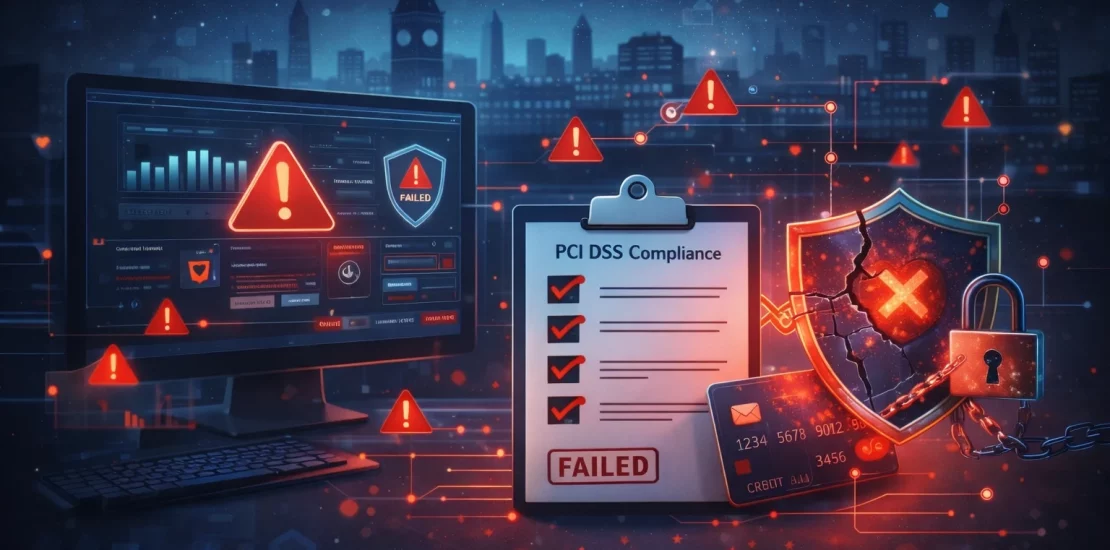
Compliance Is Not Optional, But Many Merchants Treat It as a Tick-Box Exercise
PCI DSS compliance is mandatory for any organisation that processes, stores, or transmits payment card data. Yet many UK merchants experience audit failures—not because they ignore security entirely, but because they approach compliance superficially.
Failure often results from misunderstanding requirements, incomplete implementation, or lack of operational consistency. For B2B and high risk merchants, failed compliance is more than a regulatory issue—it can disrupt revenue, trigger fines, and damage client trust.
Reason 1: Misunderstanding the Scope of PCI DSS
One of the most common causes of PCI failure is incorrectly defining the scope.
Merchants sometimes assume that only payment terminals or online checkout systems are in scope. In reality, any system that touches cardholder data—including connected servers, databases, or cloud services—falls under PCI DSS requirements.
Failing to identify all in-scope systems leads to incomplete controls and audit findings. Scope clarity is the foundation of effective compliance.
Reason 2: Inconsistent Access Controls
Access management is another frequent source of PCI failure.
Merchants must ensure that:
- Only authorised personnel access cardholder data
- Unique credentials are used for every individual
- Role-based access is applied consistently
- Access is revoked immediately when roles change
Auditors often identify gaps when shared accounts, default passwords, or undocumented privileges exist.
Reason 3: Weak Network Segmentation
Network segmentation is critical to reduce risk and scope. Yet many businesses rely on superficial firewall rules without validating segmentation in practice.
Without effective segmentation:
- Compromised devices can access sensitive systems
- Attacks spread laterally across the network
- Auditors find gaps that cannot be mitigated retrospectively
Regular testing and evidence of segmentation effectiveness are essential.
Reason 4: Insufficient Logging and Monitoring
Logs are only useful if they are reviewed and acted upon. Many merchants generate logs but fail to:
- Regularly review them
- Investigate anomalies promptly
- Maintain them for the required retention period
This leads to PCI audit failures and increases exposure to fraud and operational incidents.
Reason 5: Poor Vulnerability and Patch Management
Outdated systems and unpatched vulnerabilities are a top reason merchants lose PCI compliance.
Auditors expect:
- Regular vulnerability scans
- Prioritisation based on risk
- Evidence of remediation
- Verification that fixes are effective
Leaving systems unpatched or undocumented exposes merchants to both compliance failure and cyber attacks.
Reason 6: Lack of Documentation and Evidence
Many merchants assume that installing security tools is enough. Auditors require proof that controls operate consistently.
Documentation should include:
- Policies and procedures
- Data flow diagrams
- Configuration records
- Access logs and reviews
- Evidence of monitoring and remediation
Without up-to-date documentation, even correctly implemented controls may not pass audit scrutiny.
Reason 7: Third Party Oversight Failures
Merchants increasingly rely on third parties for payment processing, hosting, and fraud monitoring. PCI DSS compliance requires clear accountability.
Common failures include:
- Assuming vendors handle compliance without verification
- Missing evidence of third party certifications
- Lack of defined responsibilities in contracts
Auditors will assess how merchants manage third party risk. Weak oversight often results in audit findings.
Reason 8: Treating Compliance as a One-Off Project
PCI compliance is continuous, not a one-time project. Merchants that address requirements only during audit preparation often fail because operational consistency is missing.
Regular internal reviews, monitoring, and continuous process improvement are essential to maintain compliance year-round.
Why B2B and High Risk Merchants Are Especially Vulnerable
B2B merchants and high risk sectors often face additional scrutiny because:
- Transactions may be high value
- Complex payment flows increase exposure
- Fraud detection can be less obvious than in consumer-facing businesses
This makes operational discipline and robust controls even more critical.
How to Avoid PCI Failures: Practical Steps
Merchants can significantly reduce audit risk by:
- Clearly defining scope – map all systems that touch cardholder data
- Applying consistent access control – unique credentials, role-based access, and timely revocation
- Testing network segmentation – validate firewalls and isolate payment systems
- Monitoring logs actively – define review schedules and follow up on anomalies
- Maintaining vulnerability management – scan, patch, and document consistently
- Documenting all processes – policies, procedures, and evidence must be current
- Managing third party risk – verify compliance, responsibilities, and certifications
- Treating compliance as ongoing – internal audits, continuous improvement, and operational oversight
How Gradeon Helps Merchants Maintain PCI Compliance
Gradeon works with UK merchants to prevent PCI failures before they happen.
Through PCI DSS advisory services, audit preparation, and operational review, Gradeon ensures:
- Scope is clearly defined
- Controls are effective and documented
- Third party compliance is verified
- Continuous monitoring and improvement are in place
Our approach reduces audit risk and strengthens payment security, helping merchants operate with confidence.
Final Thought for Business Leaders
PCI DSS failures are rarely due to negligence, they are usually the result of gaps in planning, consistency, or evidence.
High risk and B2B merchants that invest in structured compliance management not only pass audits more easily but also reduce exposure to fraud, operational disruption, and financial penalties.
Preventing PCI failures is about operational discipline, proactive security, and smart preparation, areas where expert guidance from Gradeon makes a real difference.