
Hybrid Office Network Security UK: How Businesses Can Secure Remote and Office Connectivity
- June 15, 2026
- Posted by: Gradeon
- Categories: Consulting, IT Infrastructure
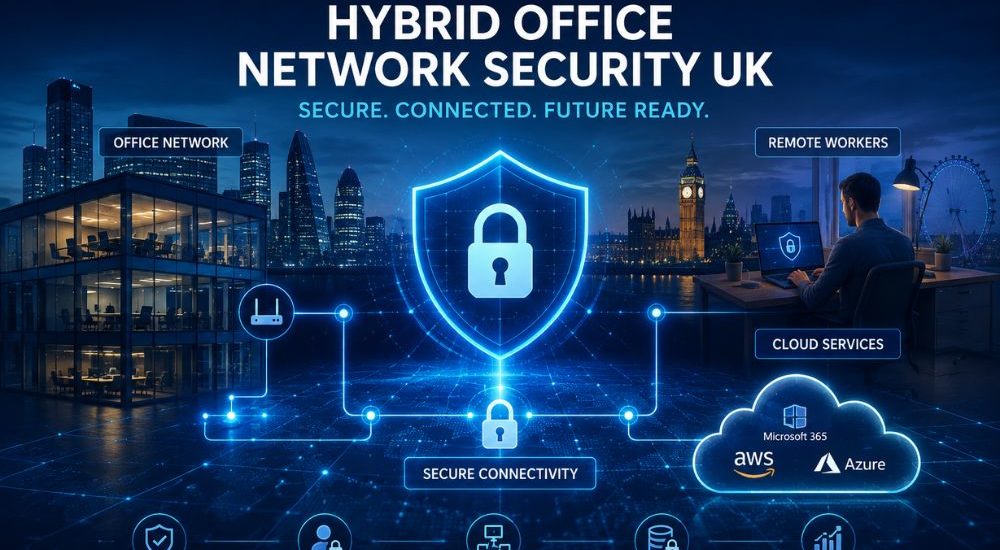
Hybrid Office Network Security UK has become a critical priority for businesses managing employees across offices, homes, and cloud platforms. As organisations continue adopting flexible working models, IT managers must ensure that users, devices, applications, and data remain protected regardless of location.
A traditional office network was designed around a fixed workplace where employees accessed systems from controlled environments. Hybrid working has changed this approach because users now connect through multiple networks, devices, and cloud services that increase security complexity.
Why Hybrid Office Networks Need Stronger Security
Hybrid environments combine office infrastructure, remote users, and cloud applications into one connected ecosystem. This creates more access points that attackers can target if security controls are inconsistent.
Many UK businesses still rely on older network models that assume everything inside the office is trusted. Modern hybrid working requires a different approach where every connection is verified before access is granted.
Security gaps often appear through unmanaged devices, weak authentication methods, outdated software, and poorly configured cloud services. These issues can expose business data and create opportunities for cyber threats.
Building Secure Connections Between Office and Remote Teams
A secure hybrid office network requires reliable communication between physical locations and remote employees. Businesses need infrastructure that supports productivity while maintaining strict security controls.
Secure remote access should include strong authentication, encrypted connections, and controlled permissions. Employees should only access the systems and data required for their role.
Network visibility is also essential because IT teams need to understand what devices are connected, where traffic is moving, and whether unusual activity is occurring.
Professional IT infrastructure services help organisations design networks that support secure connectivity, scalability, and future technology requirements.
The Role of Zero Trust Security in Hybrid Work
Zero Trust security has become a key model for protecting hybrid workplaces. Instead of automatically trusting users inside the company network, every request is verified based on identity, device status, and access permissions.
This approach reduces the risk of unauthorised access because attackers cannot move freely even if one account or device is compromised.
Key Zero Trust practices include:
- Multi-factor authentication for all users
- Device compliance checks
- Least privilege access policies
- Continuous monitoring of user activity
- Segmentation of sensitive systems
For hybrid businesses, Zero Trust security creates a consistent protection model across office and remote environments.
Securing Office Networks Against Internal Risks
Office networks remain an important part of hybrid infrastructure. However, businesses must avoid creating flat networks where every connected device has unnecessary access.
Network segmentation separates systems into controlled areas. This limits the impact of security incidents and prevents attackers from moving easily between devices.
For example, employee devices, guest networks, servers, and critical business systems should not operate with identical access levels.
Firewalls, monitoring tools, and regular security reviews help maintain visibility and reduce potential weaknesses.
Protecting Cloud Services in Hybrid Environments
Cloud platforms support collaboration, storage, communication, and business applications. However, hybrid environments require careful management because cloud systems and office networks must work together securely.
Common cloud security risks include incorrect permissions, poor identity management, and lack of monitoring. Businesses need clear policies that define who can access resources and how access is controlled.
Hybrid cloud solutions allow organisations to combine existing infrastructure with cloud services while maintaining flexibility. However, security planning must be included from the beginning rather than added later.
Device Security for Remote Employees
Remote employees often use laptops, mobile devices, and home networks to access company resources. Every device connected to business systems becomes part of the overall security environment.
Businesses should implement:
- Regular security updates
- Endpoint protection
- Device encryption
- Access controls
- Remote device management
Without proper device management, even a strong office network can be affected by insecure remote connections.
Monitoring and Managing Hybrid Network Performance
Security is not only about preventing attacks. IT teams also need visibility into performance issues that affect employee productivity.
Slow connections, unreliable access, and poorly managed infrastructure can impact business operations. Monitoring tools help identify problems before they become major disruptions.
A well-designed hybrid environment should provide both security and operational efficiency.
Why Businesses Need a Structured Hybrid Network Strategy
Hybrid working is now a permanent model for many organisations. Businesses cannot depend on temporary solutions created during the shift to remote work.
A structured strategy should include:
- Secure network architecture
- Strong identity management
- Cloud security controls
- Device protection
- Regular testing and improvement
The goal is to create an environment where employees can work from anywhere without increasing unnecessary risk.
How Gradeon Supports Secure Hybrid Infrastructure
Managing hybrid networks requires planning across connectivity, security, cloud services, and business requirements. Gradeon helps businesses assess, design, and improve infrastructure environments that support modern working models.
From office network upgrades to cloud integration and secure remote access, the right infrastructure approach helps businesses maintain reliability and protection.
Hybrid cloud solutions, secure access controls, and effective monitoring create a foundation that supports long-term business growth.
Frequently Asked Questions
What is hybrid office network security?
Hybrid office network security protects office systems, remote users, devices, and cloud services through integrated security controls, monitoring, and access management.
Why is hybrid work security important for UK businesses?
Hybrid work security helps UK businesses protect sensitive data, maintain reliable access, and reduce cyber risks across distributed working environments.
How does Zero Trust improve hybrid network security?
Zero Trust improves security by verifying every user, device, and access request before allowing connection to business resources.
Can IT infrastructure services support hybrid workplaces?
Yes. IT infrastructure services help businesses design, secure, and manage networks that support office, remote, and cloud-based operations.