
Zero Trust Security for Small Business UK: A Practical Guide to Protecting Modern Businesses
- June 18, 2026
- Posted by: Gradeon
- Category: Cyber Security
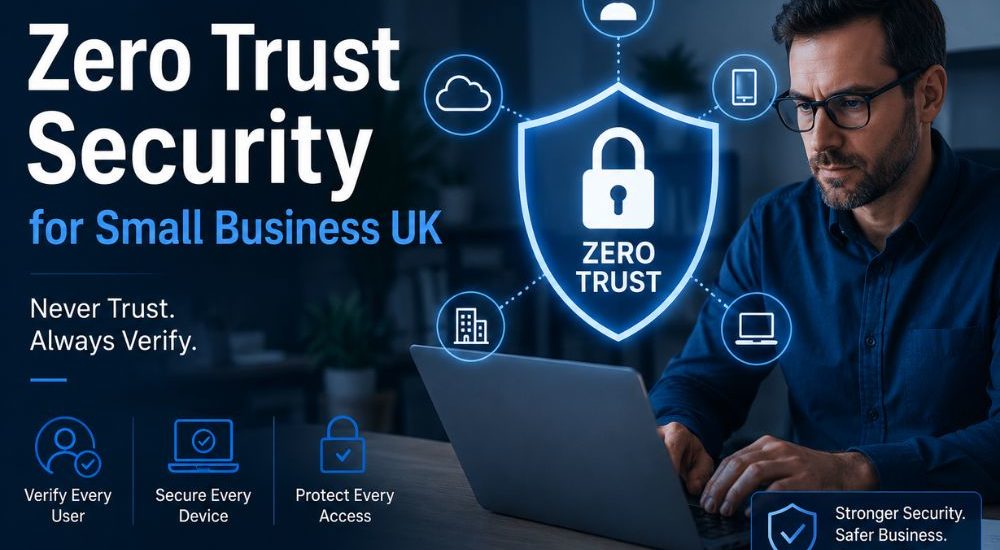
Zero Trust Security for Small Business UK is becoming an essential approach as organisations manage remote workers, cloud applications, and increasingly complex cyber threats. Small businesses are no longer protected by traditional office boundaries because employees access systems from multiple locations and devices.
Traditional security models often assume that users inside a company network can be trusted automatically. Zero Trust changes this approach by requiring continuous verification before allowing access to business resources.
What Is Zero Trust Security?
Zero Trust is a security framework based on the principle of “never trust, always verify”. Every user, device, application, and connection must be authenticated and authorised before accessing company systems.
This approach reduces the risk of unauthorised access because attackers cannot easily move through a network after gaining entry. Each access request is evaluated using identity, device security, location, and user permissions.
For small businesses, Zero Trust provides a practical way to strengthen protection without depending only on traditional network security methods.
Why Small Businesses Need Zero Trust Security
Many small businesses believe cyber attacks mainly target large organisations, but attackers often focus on smaller companies because they may have limited security resources. Weak passwords, outdated systems, and poor access controls can create opportunities for cyber criminals.
Remote working and cloud adoption have increased the number of connections businesses need to protect. Employees may use personal devices, home networks, and online applications that create additional security challenges.
A Zero Trust approach helps small businesses create stronger security controls across all areas of their digital environment.
Key Principles of Zero Trust for Small Businesses
Zero Trust security is built around several important principles that help businesses reduce security risks.
Verify Every User and Device
Every user should confirm their identity before accessing business systems. Multi-factor authentication adds an extra security layer by requiring additional verification beyond passwords.
Devices should also meet security requirements before connecting to company resources. This includes checking software updates, encryption, and security protection.
Apply Least Privilege Access
Small businesses should provide employees only the access they need to complete their work. Limiting permissions reduces the damage caused by compromised accounts.
For example, an employee working in marketing should not automatically have access to financial systems or sensitive customer information.
Monitor Activity Continuously
Zero Trust requires ongoing monitoring instead of one-time authentication. Security teams should track unusual login attempts, suspicious behaviour, and unexpected access patterns.
Regular monitoring helps businesses identify potential threats before they become serious incidents.
Zero Trust and Remote Working Security
Remote working has changed how businesses manage access to company systems. Employees may connect from different locations, making traditional office-based security controls less effective.
Zero Trust security allows businesses to protect remote users by verifying every connection regardless of location. This creates consistent security policies for both office employees and remote teams.
Small businesses can improve remote security by combining Zero Trust principles with secure authentication, endpoint protection, and controlled access policies.
Protecting Cloud Applications With Zero Trust
Cloud platforms are now essential for many small businesses because they support collaboration, storage, and daily operations. However, incorrect permissions and weak account security can expose important business information.
Zero Trust helps businesses control cloud access by ensuring users only reach approved applications and data. Access decisions are based on identity, role, and security conditions.
Professional IT infrastructure services can help small businesses implement secure cloud environments that support productivity while maintaining strong protection.
How Zero Trust Reduces Cyber Security Risks
Cyber attackers often target weak points such as stolen passwords, compromised devices, and vulnerable applications. Zero Trust reduces these risks by creating multiple security checks throughout the business environment.
Even if an attacker gains access to one account, limited permissions and continuous verification can prevent further movement across systems.
Working with experienced cyber security services can help businesses identify weaknesses and build stronger protection strategies based on their specific requirements.
Implementing Zero Trust Security Step by Step
Small businesses do not need to transform their entire security environment immediately. A gradual approach allows organisations to improve protection while managing costs.
The first step is identifying important systems, users, devices, and data that require protection. Businesses should understand where sensitive information is stored and who needs access.
Next, companies can introduce stronger authentication, improve access controls, and monitor network activity. Over time, additional Zero Trust measures can be added.
The Role of Managed IT Support in Zero Trust Adoption
Implementing Zero Trust requires ongoing management because security policies need regular updates as businesses grow. Small organisations may not have dedicated security teams to manage these requirements internally.
Managed IT support helps businesses maintain security systems, monitor threats, and manage technology improvements. External expertise allows small businesses to adopt stronger security practices without increasing internal workload.
A structured Zero Trust strategy creates a more secure foundation for future growth.
Common Challenges When Adopting Zero Trust
One challenge for small businesses is understanding where to begin. Without proper planning, organisations may introduce security tools without creating a complete protection strategy.
Another challenge is balancing security with employee productivity. Security controls should protect business resources without creating unnecessary barriers for users.
A successful Zero Trust implementation focuses on practical solutions that match business needs and operational requirements.
Why Zero Trust Is the Future of Small Business Security
Cyber threats continue to evolve, and traditional security approaches are no longer enough for modern working environments. Small businesses need security models that protect users, devices, and applications wherever they operate.
Zero Trust provides a flexible approach that supports remote work, cloud adoption, and digital transformation. By adopting stronger verification and access controls, businesses can improve resilience against cyber attacks.
For UK small businesses, Zero Trust is becoming a necessary part of building a secure and reliable technology environment.
Frequently Asked Questions
What is Zero Trust Security for small businesses?
Zero Trust Security protects small businesses by verifying every user, device, and connection before allowing access to systems and sensitive information.
Why should small businesses use Zero Trust security?
Small businesses should use Zero Trust security to reduce cyber risks, protect data, and secure remote access across modern digital environments.
Is Zero Trust expensive for small businesses?
Zero Trust costs depend on business requirements, but many solutions can be implemented gradually with scalable security improvements.
Can Zero Trust protect remote employees?
Yes. Zero Trust protects remote employees by verifying identities, securing devices, and controlling access before users connect to company resources.
Do small businesses need external Zero Trust support?
Yes. External specialists can help small businesses design, implement, and manage Zero Trust security strategies effectively with limited internal resources.